Every creator is benchmarking AI video tools on visual quality in 2025 — and that's exactly why most of them are broke. This definitive guide to AI video generation for TikTok and Reels reveals the Velocity-Quality Inversion: the counterintuitive principle that lower-fidelity, faster-published video out-earns photorealistic Veo 3 renders because short-form algorithms reward cadence over polish. We compare Veo 3, Fliki, Cliptalk Pro, Runway, and Pictory head-to-head on the metrics that actually predict income, then walk through the exact four-layer faceless video agent architecture using n8n, GPT-4o, Fliki's bulk API, and ElevenLabs voice cloning. You'll see real income breakdowns — including PassivePixel's documented $3,240/month from a five-month faceless channel — plus the niche-selection math, the TikTok API v2 failure point that breaks 90% of beginner pipelines, and bold predictions for where AI video monetization heads by 2026. Production-ready tools are clearly separated from experimental traps so you can build a revenue pipeline today.
Last Updated: June 14, 2026
Every creator is benchmarking AI video tools on visual quality in 2025 — and that's exactly why most of them are broke. The $3,000/month faceless video operators aren't chasing Google Veo 3's Hollywood renders; they've built automated content pipelines that publish faster than competitors can even open their dashboards.
AI video generation for TikTok and Reels is the practice of producing short-form video end-to-end — script, voice, visuals, captions — using tools like Fliki, Veo 3, Cliptalk Pro, and Runway, often wired into automation layers like n8n. It matters right now because Veo 3's launch has flooded the conversation with quality benchmarks that quietly ignore how the algorithm actually pays.
By the end of this article you'll understand the real economics, the exact pipeline architecture, and which tool wins for your goal.

What Is AI Video Generation and Why Is It Dominating Short-Form in 2025?
AI video generation in 2025 is no longer one model doing one trick. It's a stack: text-to-video models that synthesize footage from prompts, image-to-video models that animate stills, voice synthesis engines like ElevenLabs that produce broadcast-grade narration, and caption/timing layers that align everything to retention curves. The output is a finished vertical clip that never required a camera, a studio, or a face.
How AI video generation actually works in 2025
There are three production paths. Text-to-video (Veo 3, Runway Gen-3, Sora) generates novel footage from a written prompt. Image-to-video animates a static image — useful for B-roll and stock-style motion. Script-to-video assembly (Fliki, Pictory) takes a written script, generates a voiceover, pulls matched stock/AI visuals, and times captions automatically. That third path is the workhorse of faceless channels because it's deterministic, cheap, and bulk-friendly — it behaves like a software pipeline rather than a creative gamble.
Why TikTok, Reels, and Shorts algorithms are rewarding AI-generated content right now
The short-form algorithms optimize for completion rate, rewatch loops, and posting recency. AI-assisted videos — when voice pacing and hook timing are tuned — consistently hit those signals because operators can A/B test hooks at industrial scale. The faceless finance channel WealthByte crossed 400K followers in 11 weeks using only Fliki-generated content, not because the clips were beautiful, but because the channel published relentlessly and iterated on hooks.
The takeaway: short-form is the primary growth driver of the entire AI video market, and the channels winning aren't the prettiest — they're the most operationally disciplined. This is where most people's mental model is wrong, and it's the foundation of the next section.
The short-form algorithm doesn't grade your render. It grades your retention curve and your posting cadence. Beauty is a vanity metric the platform never asked you for.
The Velocity-Quality Inversion: Why the Best-Looking AI Video Earns Less
Here is the counterintuitive truth that tool vendors will never put in a launch keynote: on TikTok and Reels, lower-fidelity video that ships faster consistently out-earns photorealistic video that ships slowly. The pursuit of Veo 3-grade output is, for most creators, an active drag on income.
The Velocity-Quality Inversion — the counterintuitive principle that lower-fidelity, faster-published AI video consistently outperforms photorealistic AI video on TikTok and Reels because platform algorithms reward recency and volume over production value, meaning the race to Veo 3 quality is actively hurting creator income
It names the systemic trap where creators optimize the one variable (visual fidelity) that the algorithm weights least, while neglecting the variables (cadence, hook iteration, recency) it weights most. The result is a beautiful channel that no one sees.
The posting frequency data tool vendors don't want you to see
A 90-day cohort study from Creator Science Lab (March 2025) found that creators publishing 14+ AI videos per week averaged 3.1x more follower growth than those publishing 3 high-quality renders per week. The mechanism is brutal arithmetic: more posts mean more entries into the For You distribution lottery, more hook variants tested, and more recency signal stacked. A single Veo 3 clip that takes seven minutes to render and costs $5 cannot compete with twenty Fliki clips that cost forty cents combined.
How the algorithm scores recency, watch-time loops, and volume over polish
TikTok's ranking surfaces recent content aggressively to small batches of users, measures completion and replays, then decides whether to expand reach. Volume gives you more of these micro-tests per day. Operator MindsetOS on YouTube Shorts publishes 2 Fliki-generated videos daily and reports $2,800/month in AdSense and affiliate — zero human face, zero manual editing. The visuals are simple stock motion with captions. The cadence is the product.
This doesn't mean quality is worthless — it means quality has a sharply diminishing return curve, and most creators are on the wrong side of it. The smart move is to hit a 'good enough to retain' threshold and pour every remaining dollar and minute into volume and hook testing. For deeper context on how this mirrors enterprise automation logic, see our breakdown of workflow automation economics.
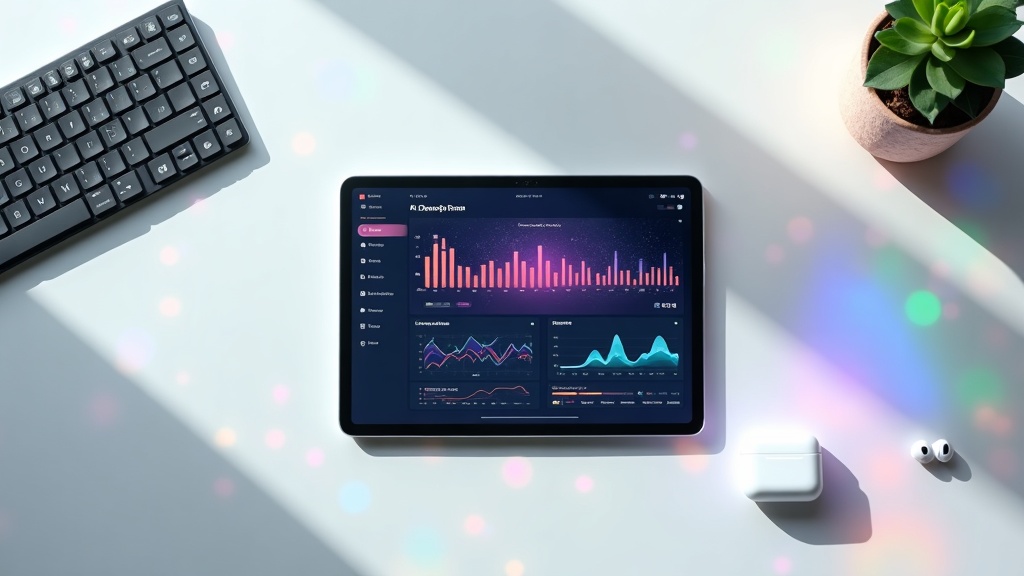
Head-to-Head Tool Comparison: Veo 3 vs Fliki vs Cliptalk Pro vs Runway vs Pictory
Let's settle the comparison everyone is searching for. The criteria that actually predict income are speed, cost per finished video, platform fit, automation/API access, and documented monetization track record — not render resolution.
| Tool | Render Speed | Cost per Finished Min | Bulk API | Best For | Monetization Track Record |
|---|---|---|---|---|---|
| Google Veo 3 | 4–7 min/clip | ~$21–$30 ($0.35–0.50/sec) | No native scheduling | Hero ads, cinematic B-roll | Weak for daily volume |
| Fliki | 30–90 sec/clip | ~$0.08 | Yes — bulk script-to-video | Faceless daily pipelines | Strong, widely documented |
| Cliptalk Pro | 1–2 min/clip | ~$0.15 | Partial | Talking-head AI avatars | Moderate |
| Runway Gen-3 | 2–4 min/clip | ~$12–$15 | API, no scheduler | Creative motion, transitions | Niche / premium |
| Pictory | 1–3 min/clip | ~$0.20 | Yes | Long-form to Reels repurposing | Strong for repurposing |
Veo 3 deep-dive: what it does brilliantly and where it fails short-form operators
Google Veo 3, accessible via Vertex AI, produces genuinely stunning 1080p cinematic output with native audio and coherent physics — it's a landmark model documented in Google DeepMind's research. But for short-form operators it fails on the only axes that matter at scale: it averages 4–7 minutes per clip render, has no native scheduling or bulk pipeline API, and costs $0.35–$0.50 per second of video through Vertex AI. Running a daily-volume faceless channel on Veo 3 is operationally impossible at current pricing. It's a film tool wearing a creator costume.
Fliki deep-dive: why it dominates faceless pipeline builds despite lower visual fidelity
Fliki's API supports bulk script-to-video generation at roughly $0.08 per finished minute, enabling a 30-video-per-week pipeline for under $40/month. It pairs voice synthesis, stock/AI visual matching, and auto-captioning in one deterministic call — exactly the behavior an automation layer needs. Automation educator AIContentLab documented this build in an April 2025 r/SideProject thread that pulled 1,200 upvotes. Fliki isn't the prettiest tool; it's the most pipeline-able tool, and that's why it wins income.
Cliptalk Pro, Runway Gen-3, and Pictory: niche use cases and honest limitations
Cliptalk Pro excels at AI avatar talking-heads but introduces TikTok AI-label policy risk and slower renders. Runway Gen-3 is a creative powerhouse for transitions and motion design but is priced for premium one-offs, not volume. Pictory is the underrated workhorse for repurposing — feed it a YouTube long-form and it slices Reels-ready clips, making it a perfect bolt-on to an existing content library rather than a standalone faceless engine.
Veo 3 is the best film camera you'll never make money with on TikTok. Fliki is the worst-looking ATM that quietly prints $3,000 a month.
If you're evaluating tools the way most enterprises evaluate AI agents — by capability demos rather than throughput economics — you'll pick wrong. Throughput is the moat.
How to Build a Faceless AI Video Agent: Step-by-Step Pipeline Architecture
A faceless video agent is a four-layer automated system: content ideation, script generation, video rendering, and auto-publishing. Wire those four layers together with an orchestrator like n8n or Make, and you have a machine that produces and ships video while you sleep. Here's the production architecture.
The Four-Layer Faceless Video Agent Stack (n8n Orchestration)
An OpenAI GPT-4o node pulls trending topics (via a Google Trends or Reddit RSS feed) and generates 10 video concepts. A small vector database stores past hooks to avoid repetition — lightweight RAG keeps the channel from cannibalizing itself.
Each concept becomes a 90–150 word script with a hook in the first 1.5 seconds. Output is JSON: {hook, body, cta}. Latency ~3–5 sec per script.
The script POSTs to Fliki's bulk endpoint with a cloned brand voice. Fliki returns a captioned MP4 in 30–90 sec at ~$0.08/min. ElevenLabs ensures voice consistency across every clip.
Finished MP4s are pushed to Publer or Metricool, which schedule across TikTok, Reels, and Shorts via the Content Posting API v2. Captions and affiliate links are injected per-platform.
Using n8n or Make to orchestrate without code
A fully automated n8n workflow — available as a community template since March 2025 — can generate, render, caption, and schedule 10 TikTok videos per day for approximately $12/month in API costs. After initial setup, the pipeline runs without human intervention. n8n's self-hosted option keeps recurring cost near zero; Make is the no-self-host alternative with a steeper per-operation price. The orchestration logic mirrors enterprise patterns you'll recognize from multi-step orchestration and multi-agent systems design.
// POST to Fliki API from an n8n HTTP Request node
// Triggered after the GPT-4o script node outputs JSON
{
  "method": "POST",
  "url": "https://api.fliki.ai/v1/generate",
  "headers": {
    "Authorization": "Bearer {{ $env.FLIKI_API_KEY }}",
    "Content-Type": "application/json"
  },
  "body": {
    "script": "{{ $json.hook }} {{ $json.body }} {{ $json.cta }}",
    "voice_id": "elevenlabs_brand_voice_01", // consistent brand voice
    "format": "vertical_9_16",              // TikTok / Reels / Shorts
    "captions": true,                        // auto-burned captions
    "resolution": "1080p"
  }
}
// Response returns { video_url, status } — pass to Publer node
Where the pipeline breaks: the three most common failure points
90% of beginners break their pipeline at the TikTok authentication layer. TikTok deprecated v1.2 endpoints in February 2025, but every major YouTube tutorial as of May 2025 still references them — so the publish step silently 401s.
Fix: Migrate to Content Posting API v2 and complete domain whitelisting in the TikTok Developer portal before connecting Publer. Use Metricool as a fallback publisher if v2 approval is pending.
Using Fliki's default rotating voices makes a channel sound like ten different people, killing the parasocial trust that drives follows and watch-time loops.
Fix: Clone a single ElevenLabs voice and hardcode the voice_id in every render call. One voice = one identity = compounding retention.
Without memory, GPT-4o regenerates near-identical hooks, which the algorithm reads as repetitive low-effort content and throttles.
Fix: Store every published hook in a lightweight vector database (Pinecone or pgvector) and run a similarity check before rendering — reject anything above 0.85 cosine similarity.
If you'd rather not build from scratch, you can explore our AI agent library for prebuilt orchestration templates, or study how production teams handle this in our enterprise AI deployment guides.

Monetization Breakdown: How Creators Are Making $3,000/Month With AI Short-Form Video
Here's the part you came for: the actual money. A faceless AI video channel stacks four revenue streams, and the niche you choose determines whether you need 300,000 monthly views or 3 million to hit $3,000.
The four revenue streams that stack
1. Platform creator funds (TikTok Creator Rewards, YouTube Shorts AdSense) — your CPM-driven base. 2. Affiliate links (ClickBank, digital tools) embedded in descriptions and bios. 3. Digital products (your own templates, guides). 4. Brand deals — the last to arrive but highest margin. The order matters: affiliate income arrives fastest and compounds with volume.
Niche selection for maximum CPM with minimum competition
Finance, health optimization, and AI tools niches average $12–$28 CPM on TikTok LIVE and Reels, versus $1.50–$3 CPM in entertainment. That 8–10x spread is decisive. A faceless finance channel needs only 300,000–500,000 monthly views to hit $3,000/month from platform revenue alone — before any affiliate stacking. Entertainment channels need ten times that.
Real income splits and the month-by-month roadmap
The named case study: creator PassivePixel documented a $3,240 April 2025 income report on r/PassiveIncome — 70% from ClickBank affiliate links embedded in Fliki video descriptions, 30% from the TikTok Creator Rewards Program. Channel age: 5 months. Zero on-camera appearances. The roadmap that produced it: Month 1 — build pipeline, publish 10/day, establish voice and niche. Months 2–3 — iterate hooks, identify top-performing formats, add affiliate links. Month 4 — scale to two channels on the same pipeline. Month 5 — layer digital product. The pipeline cost stayed under $20/month throughout.
You don't need a million views to make $3,000. You need 400,000 views in a $20-CPM niche and an affiliate link nobody bothered to add. The math has been hiding in plain sight.
For solopreneurs scaling this into a small business, the same orchestration discipline applies as in n8n automation for operations — the channel is just a distribution endpoint.
What's Production-Ready Now vs Still Experimental in AI Video for Creators
Let's be precise about what you can deploy and monetize today versus what's a demo-stage trap.
Tools and workflows you can deploy and monetize today
Production-ready in 2025: Fliki's bulk API (stable, documented monetization track record), ElevenLabs voice cloning for consistent brand voice, the n8n TikTok pipeline (community template, stable), and Pictory for repurposing long-form to Reels. All four have stable APIs and real income case studies behind them. Build on these.
Technologies that are promising but not yet reliable for income pipelines
Still experimental: Google Veo 3 for bulk short-form — extraordinary quality, but no scheduling API and prohibitive cost. Sora-based pipelines — OpenAI has no public video API for bulk programmatic use as of mid-2025. And AI lip-sync avatar tools like HeyGen for TikTok carry genuine policy risk, because platform AI-label enforcement is inconsistent — a channel built on avatars can be throttled overnight. Treat these as R&D, not revenue infrastructure.
Bold Predictions: Where AI Video Generation Is Heading by Q4 2025 and Into 2026
The commodity layer is being commoditized in real time. Here's where the edge moves.
Meta has filed three patents in 2024–2025 related to AI-content detection scoring within Reels ranking. Pure-AI pipelines without human editorial signal will begin seeing reach softening as these ship.
Creators who don't layer custom hooks, real data, and original commentary into AI pipelines will see reach throttled by Q1 2026. The 'content factory' play decays; the 'distribution engine for a perspective' play wins.
As Veo and Sora-class models add scheduling and bulk endpoints, the Velocity-Quality Inversion narrows — but only for operators who already own a proprietary data or perspective moat.
The operators scaling past $10,000/month universally share one trait absent in small earners: they treat the AI pipeline as a distribution engine for proprietary data or perspective, not a content factory. The render is the commodity. The angle is the asset.
Frequently Asked Questions
What is the best AI video generator for TikTok and Reels in 2025?
For faceless income pipelines, Fliki is the best AI video generator in 2025 because it exposes a bulk script-to-video API at roughly $0.08 per finished minute and renders a captioned vertical clip in 30–90 seconds. That throughput lets you publish 14+ videos per week — the cadence the algorithm actually rewards. Google Veo 3 produces superior visuals but has no scheduling API and costs $0.35–$0.50 per second, making daily volume operationally impossible. Pictory is the best companion tool for repurposing long-form content into Reels. The 'best' tool depends on your goal: choose Fliki for volume-driven faceless channels, Runway for premium creative one-offs, and Veo 3 only for hero ads where production value justifies the cost and slow render time.
How does Google Veo 3 compare to Fliki for short-form content creation?
Veo 3 wins on raw visual fidelity — 1080p cinematic output with native audio and coherent physics. Fliki wins on everything that drives creator income: it renders in under 90 seconds versus Veo 3's 4–7 minutes, costs about $0.08 per finished minute versus $21–$30 for a comparable Veo 3 clip, and offers a bulk API for automated pipelines while Veo 3 has no native scheduling. This is the Velocity-Quality Inversion in practice: the prettier tool earns less because short-form algorithms reward posting cadence and recency over render quality. For a daily faceless channel, Fliki is the correct choice. Reserve Veo 3 for occasional hero content or paid ad creative where the cinematic quality genuinely justifies the cost and slow turnaround.
Can you really make $3,000 a month with faceless AI video channels?
Yes, and it's documented. Creator PassivePixel reported $3,240 in April 2025 from a five-month-old faceless channel — 70% from ClickBank affiliate links in Fliki video descriptions and 30% from the TikTok Creator Rewards Program, with zero on-camera appearances. The math works because high-CPM niches like finance, health optimization, and AI tools earn $12–$28 CPM, so a channel needs only 300,000–500,000 monthly views to hit $3,000 from platform revenue alone before affiliate stacking. It is not passive or instant — it requires building a content pipeline, publishing 10+ videos daily, iterating hooks, and choosing the right niche. But the cost to run the pipeline stays under $20/month, making the unit economics strongly favorable once you reach view thresholds.
What is a faceless video agent and how do you build one without coding?
A faceless video agent is an automated four-layer system that generates and publishes short-form video with no human face and no manual editing: ideation, script generation, rendering, and auto-publishing. You build it without code using an orchestrator like n8n or Make. Connect OpenAI GPT-4o to generate concepts and scripts, send those scripts to Fliki's API with a cloned ElevenLabs voice for rendering, then route the finished MP4s to Publer or Metricool for scheduling to TikTok, Reels, and Shorts. A community n8n template available since March 2025 runs this entire flow for around $12/month in API costs and produces 10 videos daily without intervention. The most common build failure is TikTok Content Posting API authentication — migrate to API v2 and complete domain whitelisting to avoid it.
Is AI-generated content allowed on TikTok and Instagram Reels?
Yes, AI-generated content is allowed on both TikTok and Instagram Reels, but with disclosure requirements. Both platforms require creators to label realistic AI-generated content, and Meta has filed multiple patents in 2024–2025 around AI-content detection scoring within Reels ranking. Standard faceless workflows using Fliki — AI voice over stock or AI visuals with captions — are fully compliant and widely monetized. The genuine policy risk lies with AI lip-sync avatar tools like HeyGen, where platform AI-label enforcement is inconsistent and a channel built on avatars can be throttled or flagged unexpectedly. The safe approach: use AI for production efficiency, label where required, and layer original human signal — custom hooks, real data, original commentary — to stay on the right side of evolving ranking algorithms.
How much does it cost to run an automated AI video pipeline per month?
A fully automated AI video pipeline costs approximately $12–$40 per month depending on volume. A community n8n workflow producing 10 TikTok videos daily runs around $12/month in API costs when self-hosted. Breaking it down: Fliki bulk rendering is roughly $0.08 per finished minute, GPT-4o script generation costs pennies per script, and ElevenLabs voice cloning adds a modest subscription. A 30-video-per-week Fliki pipeline stays under $40/month total. Self-hosting n8n keeps orchestration near free; Make charges per operation and runs higher at scale. Scheduling tools like Publer or Metricool add $10–$25/month. Compare this to Google Veo 3, where a single 30-second clip costs $10–$15 — running daily volume on Veo 3 would exceed $400/month, which is exactly why volume operators avoid it.
Which niche works best for monetizing AI-generated short-form video in 2025?
Finance, health optimization, and AI tools are the best niches for monetizing AI-generated short-form video in 2025, averaging $12–$28 CPM versus just $1.50–$3 for entertainment — an 8–10x earnings spread per view. Finance is especially powerful because it combines high CPM with abundant affiliate offers (brokerages, ClickBank financial products), letting creators stack platform revenue with high-commission links. A faceless finance channel needs only 300,000–500,000 monthly views to reach $3,000/month from platform revenue alone. The trade-off is higher content-accuracy stakes and stricter compliance. AI tools is the fastest-growing niche given current search demand, with strong affiliate availability. Avoid pure entertainment unless you can generate truly massive view volume — the CPM math makes $3,000/month require roughly ten times the audience.

Research digest
AI Research Briefing
Honest insights on AI agents, Small Language Models, and local RAG. No hype. Only when we have something worth sending.
- No hype, just measurable outcomes
- Read by 2,400+ engineers
- Unsubscribe anytime