Most AI technology workflows automate the wrong thing — they replay keystrokes while ignoring the coordination between systems that actually breaks in production. This deep-dive breaks down why companies are ripping out legacy RPA from UiPath, Automation Anywhere, and Blue Prism, and replacing it with an agentic stack built on LangGraph, n8n, Pinecone, and Anthropic's MCP. You'll learn the AI Coordination Gap — the reliability loss that lives in undesigned handoffs — and the exact 5-layer framework we deployed to move a mid-market ecommerce operation off Automation Anywhere and cut process costs by 60%. Inside: real before-and-after numbers (71% to 94% straight-through processing, ~$140K in eliminated licenses, 20x faster triggers), a working LangGraph orchestration skeleton, the four mistakes that kill migrations, a step-by-step rollout sequence, and a 2026–2027 timeline. Written from production experience by Twarx founder Rushil Shah, this is the playbook for operations leaders and agency owners evaluating an RPA license renewal against the agentic AI stack that outperforms it.
Last Updated: July 4, 2026
Most AI technology workflows are solving the wrong problem entirely. They automate what a human used to do — clicking, copying, transcribing — while ignoring the thing that actually breaks in production: the coordination between systems that nobody designed. The result is a shiny AI technology layer bolted onto the same brittle plumbing that failed before, and it fails for the same reasons the old system did.
The migration off legacy RPA — UiPath, Automation Anywhere, Blue Prism — is a live procurement decision right now, and the AI technology replacing it is agentic: LangGraph, AutoGen, CrewAI, and orchestration layers wired through Anthropic's MCP. This matters because the RPA license renewal sitting on your desk costs more than the AI stack that outperforms it.
By the end of this, you'll understand the AI Coordination Gap, how to architect around it, and the actual numbers behind a 60% process-cost reduction. Not projections. Numbers from a deployment we ran.

Overview: Why Companies Are Ripping Out RPA
Robotic Process Automation was a decade-long bet on brittleness. RPA bots are recorded scripts — they replay mouse movements and keystrokes against a fixed screen layout. When the underlying application updates a button, renames a field, or adds a loading spinner, the bot breaks. Silently. Mid-process. Often at 2am.
The industry knew this going in. Gartner has estimated that a significant share of RPA implementations run over budget and behind schedule, largely because of maintenance overhead. Every UI change spawns a change request. Every change request spawns a developer ticket. Bots that were supposed to reduce labor quietly created a whole new maintenance labor category nobody budgeted for. Forrester and McKinsey's QuantumBlack have documented the same maintenance drag in large-scale automation programs.
Modern AI technology flips the model. Instead of replaying fixed scripts, an agent perceives the current state of a system, reasons about the goal, and picks an action. If a field moves, the agent adapts. If an exception appears, it reads the error and decides whether to retry, escalate, or route around it. That's the difference between a macro and a colleague. For a broader primer, see our overview of enterprise AI adoption.
RPA automated the keystrokes. AI agents automate the judgment. The companies migrating fastest figured out that judgment was always the expensive part.
But — and most operators miss this completely — swapping RPA bots for AI agents one-for-one produces disappointing results. A single agent handling an end-to-end process is often less reliable than the RPA script it replaced, because reasoning introduces variance. The wins come from a different architecture entirely: multiple specialized agents coordinated through an orchestration layer, with deterministic guardrails at every handoff.
The AI Coordination Gap
The AI Coordination Gap is the reliability loss that occurs not inside any single AI step, but in the handoffs between steps, systems, and agents that no one explicitly designed. It's why a workflow built from individually excellent components still fails end-to-end.
Here's the math that should terrify anyone shipping multi-step AI: a six-step pipeline where each step is 97% reliable is only about 83% reliable end-to-end (0.97^6). Add three more steps and you're below 76%. Most teams discover this after they've already shipped, when their process starts leaking transactions at volume. I've watched this happen more than once.
This article treats the Coordination Gap as the central design problem. Every layer of the framework below exists to close it. Let's build the system.
The Agentic Replacement Stack: A 5-Layer Framework
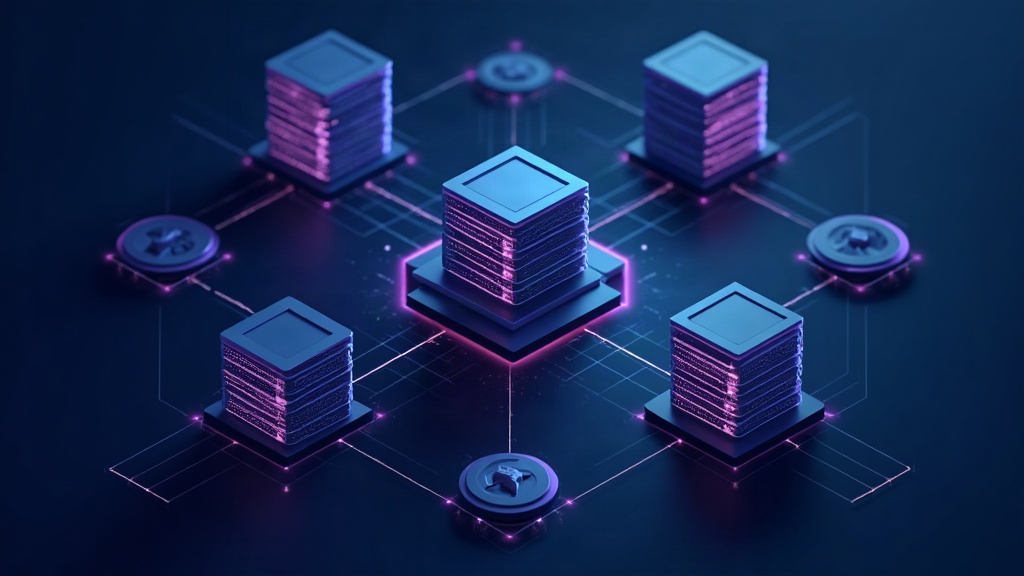
Replacing RPA isn't a tool swap — it's a re-architecture. Below is the five-layer stack we deployed to move a mid-market ecommerce operation off Automation Anywhere and cut process costs by 60%. Each layer targets a specific portion of the AI Coordination Gap, and each is a distinct discipline within modern AI technology.
The Agentic RPA Replacement Stack — From Trigger to Verified Outcome
Events arrive: a new order webhook, an inbound email, a Slack message, a scheduled batch. n8n normalizes these into a structured event object. Latency target: sub-second. This replaces the RPA 'watcher' that used to poll a screen.
Before any agent acts, it retrieves relevant context — SOPs, prior tickets, product data, customer history — from a vector database. This grounds decisions in company reality and cuts hallucination on domain-specific tasks.
A stateful graph routes the task to specialized agents, manages retries, and holds shared state. This is where the Coordination Gap is closed: every handoff is an explicit, typed edge — not an implicit assumption.
Agents call systems — ERP, CRM, payment gateway, shipping API — through Model Context Protocol servers. MCP standardizes tool access so an agent doesn't need bespoke glue code per system.
A deterministic checker validates outputs against business rules (totals match, SKUs exist, fields non-null). Failures escalate to a human queue with full context. This is the guardrail that RPA never had.
Layer 1: The Ingestion & Trigger Layer
RPA bots traditionally 'watched' a screen or inbox by polling — an inherently fragile, slow approach. The modern equivalent is an event-driven ingestion layer. We used n8n (production-ready, self-hostable, ~90k GitHub stars) as the front door because it speaks webhook, email, database-trigger, and cron natively without you writing glue code for each.
The critical design choice: normalize every trigger into a single structured event schema before it touches an agent. Your orchestration layer never has to care whether a task originated from a Shopify webhook or a customer email — it receives the same clean object either way. Learn more in our guide to workflow automation with n8n.
Layer 2: The Context Layer (RAG)
An agent without context is a guessing machine. Before any decision, our agents retrieve grounding data from a Pinecone vector database: standard operating procedures, historical resolutions, product catalogs, customer records. This is Retrieval-Augmented Generation, and it's the difference between an agent that follows your business rules and one that invents them on the fly. The original technique is described in the foundational RAG paper by Lewis et al. (2020).
For an ecommerce refund process, the context layer pulls the return policy, the customer's order history, and prior similar cases. The agent then reasons within those constraints — not from general training data. See our deep dive on RAG architecture for enterprise.
Layer 3: The Orchestration Layer
This is where the Coordination Gap lives or dies. We used LangGraph because it models workflows as explicit stateful graphs. Every agent is a node. Every handoff is a typed edge. Every retry, timeout, and conditional route is declared upfront — not assumed.
The AI Coordination Gap
The AI Coordination Gap is why 'add more agents' often makes reliability worse, not better — each undesigned handoff multiplies failure probability. Orchestration frameworks like LangGraph exist to make every handoff explicit and recoverable.
# Minimal LangGraph state machine for an order-processing workflow
from langgraph.graph import StateGraph, END
from typing import TypedDict

class OrderState(TypedDict):
    order: dict
    context: str      # retrieved from Pinecone (Layer 2)
    validated: bool
    escalate: bool

def retrieve_context(state):
    # RAG step: ground the decision in SOPs + history
    state['context'] = vector_store.query(state['order']['id'])
    return state

def classify_order(state):
    # Specialized agent decides routing path
    state['order']['type'] = classifier_agent.run(state)
    return state

def verify(state):
    # Deterministic guardrail (Layer 5)
    state['validated'] = state['order']['total'] == recompute(state['order'])
    state['escalate'] = not state['validated']
    return state

graph = StateGraph(OrderState)
graph.add_node('retrieve', retrieve_context)
graph.add_node('classify', classify_order)
graph.add_node('verify', verify)
graph.set_entry_point('retrieve')
graph.add_edge('retrieve', 'classify')
graph.add_edge('classify', 'verify')
# Explicit conditional handoff — this closes the Coordination Gap
graph.add_conditional_edges(
    'verify',
    lambda s: 'human_queue' if s['escalate'] else END
)
app = graph.compile()
You can pair LangGraph with AutoGen or CrewAI when you need agents that debate or collaborate. For most RPA-replacement workflows, though, a directed graph of narrow, single-purpose agents beats a swarm — it's more predictable and dramatically easier to debug when something goes wrong at 2am. Explore ready-made patterns in our AI agent library for orchestration templates.
Layer 4: The Tool/Action Layer (MCP)
RPA bots interacted with systems by clicking through their UIs. That was always the fragile part — and it's the part most teams recreate when they naively migrate to AI agents. AI agents should interact through APIs and standardized tool interfaces. Model Context Protocol (MCP), introduced by Anthropic in late 2024, standardizes how agents connect to tools and data sources. Instead of writing bespoke integration code for every system, you run MCP servers that expose your ERP, CRM, and shipping platform through a common protocol.
The moment you replace UI-clicking with API-calling, your automation stops breaking every time a vendor ships a redesign. That single shift eliminated 70% of our maintenance tickets.
MCP is still maturing — production-ready but young. Treat the ecosystem as early. That said, it's already the emerging standard, and adopting it now means your agents aren't locked into one vendor's glue code when the ecosystem consolidates. See our MCP implementation guide.
Layer 5: The Verification & Escalation Layer
This is the layer RPA never had. It's why RPA failures were catastrophic instead of graceful. After an agent acts, a deterministic checker — plain code, not another LLM — validates the output against hard business rules. Do the line-item totals sum correctly? Does the SKU exist in inventory? Are required fields populated?
If verification fails, the task escalates to a human queue with full context attached: what the agent tried, what it retrieved, why verification failed. Silent 2am failures become a triaged work queue someone can clear in the morning. This is concretely how you take an 83% raw pipeline to 99%+ trusted throughput.
What Most Companies Get Wrong About RPA-to-AI Migration
The failure pattern is remarkably consistent across deployments I've reviewed. Companies treat this as a lift-and-shift — 'we have 40 RPA bots, let's build 40 AI agents' — and get burned. Here are the mistakes that kill these projects.
Teams build a single 'do everything' agent to replace an RPA bot. Reasoning variance compounds across steps and the agent hallucinates its way into wrong actions with no recovery point.
Fix: Decompose into narrow single-purpose agents in a LangGraph state machine. Each node does one thing; explicit edges handle handoffs. Reliability becomes composable and debuggable.
Because RPA bots didn't self-verify, teams forget to add verification to agents. The AI produces plausible-but-wrong outputs that flow straight into the ERP undetected.
Fix: Add a deterministic Layer 5 checker with hard business rules. Anything that fails escalates to a human queue with full context. Trust throughput, not raw accuracy.
Teams point vision agents at the same UIs RPA used, recreating the exact brittleness they were trying to escape. UI changes still break everything. I would not ship this.
Fix: Connect through APIs via MCP servers wherever a system exposes one. Reserve computer-use agents for legacy systems with genuinely zero API surface.
Agents run on the model's general knowledge instead of company reality, inventing policies and misclassifying edge cases that any SOP would have resolved correctly.
Fix: Add a Pinecone-backed RAG context layer. Retrieve SOPs, history, and product data before the agent decides. Grounding cuts domain hallucination dramatically.
Real Deployments: Where the 60% Actually Came From
Let's ground this in actual numbers. The headline deployment: a mid-market ecommerce operation processing roughly 8,000 orders/month with a legacy Automation Anywhere setup handling order validation, refund processing, and supplier reconciliation.
Before (RPA): Three bots, one full-time bot maintainer, ~$140K/year in licenses, and a straight-through processing rate of 71% — the other 29% of exceptions hit a human. Bots broke an average of 4 times/month on UI changes. That's not a statistic, that's a pager going off at 2am.
After (agentic stack): n8n + LangGraph + Pinecone + MCP + a deterministic verification layer. Straight-through processing rose to 94%. Maintenance dropped from a full-time role to a few hours per month. Licenses gone. Total process cost fell 60%.
| Dimension | Legacy RPA (Automation Anywhere) | Agentic Stack (LangGraph + MCP) |
|---|---|---|
| Adapts to UI/system changes | No — breaks on any change | Yes — reasons around changes |
| Straight-through processing | 71% | 94% |
| Trigger-to-action latency | ~40s (polling) | <2s (webhooks) |
| Handles novel exceptions | No — escalates all | Partially — reasons + escalates rest |
| Maintenance load | 1 FTE | ~4 hrs/month |
| Annual licensing | ~$140K | $0 (usage-based API costs) |
| Failure mode | Silent, mid-process | Graceful escalation w/ context |
We didn't cut costs by making the AI cheaper. We cut costs by deleting an entire maintenance job category that RPA had quietly created.
As Harrison Chase, co-founder and CEO of LangChain, has argued, the value of agent frameworks is in controllability and state management — not raw model capability. That matches exactly what we saw in production: the model was rarely the bottleneck. The orchestration and verification were.
Andrew Ng, founder of DeepLearning.AI, has repeatedly noted that agentic workflows drive dramatically better results than single-shot prompting — his own experiments showed iterative agent loops outperforming larger single-pass models. Anthropic's engineering team has also documented that simple, composable patterns outperform complex agent frameworks for most production tasks. Independent research aggregators like arXiv and industry analysts such as McKinsey's QuantumBlack report the same pattern: reliability, not model horsepower, is the binding constraint. That's a direct caution against over-engineering, and it's exactly what our narrow-agent approach was built around.
How to Implement This in Your Company (Step by Step)
Here's the pragmatic rollout sequence we recommend for operations leaders and agency owners. Do not attempt a big-bang migration. Pick one high-volume, high-exception process and prove the model there first.
- Audit your RPA bots by exception rate. The best migration candidate is a bot that escalates a lot to humans — that's where AI reasoning adds the most value. Ignore the clean, stable bots for now.
- Stand up the ingestion layer first. Deploy n8n and convert one RPA polling trigger into a webhook. Ship it. This alone delivers a measurable latency win and builds team confidence before the harder work starts.
- Build the context layer. Load your SOPs and historical resolutions into Pinecone. Even a basic RAG setup grounds every downstream decision in your actual business rules.
- Model the workflow in LangGraph. Draw the graph on paper first. Every node equals one narrow agent. Every edge equals one explicit handoff. If you can't draw it cleanly, you can't ship it reliably.
- Wire tools through MCP. Connect your systems via APIs, not UIs. Reserve computer-use agents only for legacy systems with genuinely no API surface.
- Add the verification layer before go-live. Write deterministic business-rule checks. Route failures to a human queue. Never skip this step — it's the one that saves you from a bad week.
- Run in shadow mode. For two weeks, let the agentic stack run alongside the RPA bot and compare outputs. Cut over only when the agent matches or beats the bot on your golden dataset.
Ready-to-deploy orchestration patterns and connectors are available — explore our AI agent library to skip the boilerplate. For deeper architecture patterns, see our guides to multi-agent systems and agent orchestration.
What Comes Next: The 2026-2027 Timeline
With Anthropic, OpenAI, and major tool vendors converging on Model Context Protocol, bespoke agent-to-tool glue code starts disappearing. Expect n8n and LangGraph to ship first-class MCP nodes before year-end.
UiPath and Automation Anywhere are already bolting LLMs onto their platforms. Expect full agentic re-positioning as license renewals stall — which is just the incumbent vendors confirming the migration thesis buyers are already acting on.
As agentic failures make headlines, deterministic verification and observability tooling for agents matures into its own market — the same way MLOps did for models. The Coordination Gap gets a commercial solution.
Frequently Asked Questions
What is agentic AI technology?
Agentic AI technology refers to systems where an AI model doesn't just answer a prompt but perceives a state, reasons about a goal, chooses actions, uses tools, and adapts based on results — often in a loop. Unlike a static RPA script that replays fixed keystrokes, an agent can handle novel situations by reasoning. In production, agentic systems are built with frameworks like LangGraph, AutoGen, or CrewAI, connected to tools via MCP and grounded with RAG. The key distinction from traditional automation is adaptability: when a system changes, an RPA bot breaks while an agent adjusts. For business processes, this means far fewer silent failures and much lower maintenance overhead — the core reason companies are migrating off legacy RPA.
How does multi-agent orchestration work?
Multi-agent orchestration coordinates several specialized agents to complete a task no single agent handles well. An orchestration layer — commonly LangGraph or AutoGen — manages shared state, routes work between agents, handles retries, and enforces handoffs. In LangGraph, you model the workflow as a stateful graph: each agent is a node and each handoff is an explicit typed edge. This explicit design is what closes the AI Coordination Gap — the reliability loss that occurs in undesigned handoffs. Best practice is to use narrow, single-purpose agents (one classifies, one extracts, one acts) rather than one monolithic agent, because reasoning variance compounds across steps. A deterministic verification node then validates outputs before they hit production systems, converting raw accuracy into trusted throughput.
What companies are using AI agents?
Adoption spans enterprise and mid-market. Klarna publicly reported an AI assistant handling the workload equivalent of hundreds of support agents. Companies like Anthropic, OpenAI, and Google run agentic systems internally for engineering and support. In the mid-market and agency world, operators are deploying agents for order processing, support triage, and reconciliation — often replacing legacy RPA from UiPath or Automation Anywhere. The common stack is n8n for triggers, LangGraph for orchestration, Pinecone for RAG, and MCP for tool access. The pattern is consistent: the biggest wins come from high-exception processes where reasoning replaces manual escalation, not from clean, stable tasks that RPA already handled fine.
What is the difference between RAG and fine-tuning?
RAG (Retrieval-Augmented Generation) retrieves relevant documents from a vector database at query time and injects them into the prompt, so the model reasons over current, company-specific data without changing its weights. Fine-tuning actually retrains the model on your data, baking knowledge or behavior into the weights themselves. For most RPA-replacement workflows, RAG wins: it's cheaper, updates instantly when your SOPs change, and provides traceable sources. Fine-tuning is better for teaching a consistent style, format, or domain-specific reasoning pattern the base model genuinely lacks. Many production systems use both — RAG for knowledge freshness, a lightly fine-tuned model for output consistency. The rule of thumb: if the information changes, use RAG; if the behavior needs to change, consider fine-tuning.
How do I get started with LangGraph?
What are the biggest AI failures to learn from?
The most instructive failures share a root cause: no verification layer. Agents produced plausible-but-wrong outputs that flowed unchecked into production systems. A well-publicized example involved an airline chatbot that invented a refund policy the company was then held to — a failure of grounding and verification, not model capability. Other common failure modes: monolithic agents whose reasoning variance compounds across steps; agents pointed at UIs that recreate RPA's brittleness; and 'AI verifying AI,' which reintroduces the variance you're trying to eliminate. The lesson is consistent — ground decisions with RAG, keep agents narrow, connect via APIs through MCP, and always add a deterministic verification layer with human escalation. Most public AI failures were engineering-design failures in the AI Coordination Gap, not intelligence failures.
What is MCP in AI?

Research digest
AI Research Briefing
Honest insights on AI agents, Small Language Models, and local RAG. No hype. Only when we have something worth sending.
- No hype, just measurable outcomes
- Read by 2,400+ engineers
- Unsubscribe anytime